

After My Mother Died, I Turned the Weight of My Grief into Stones
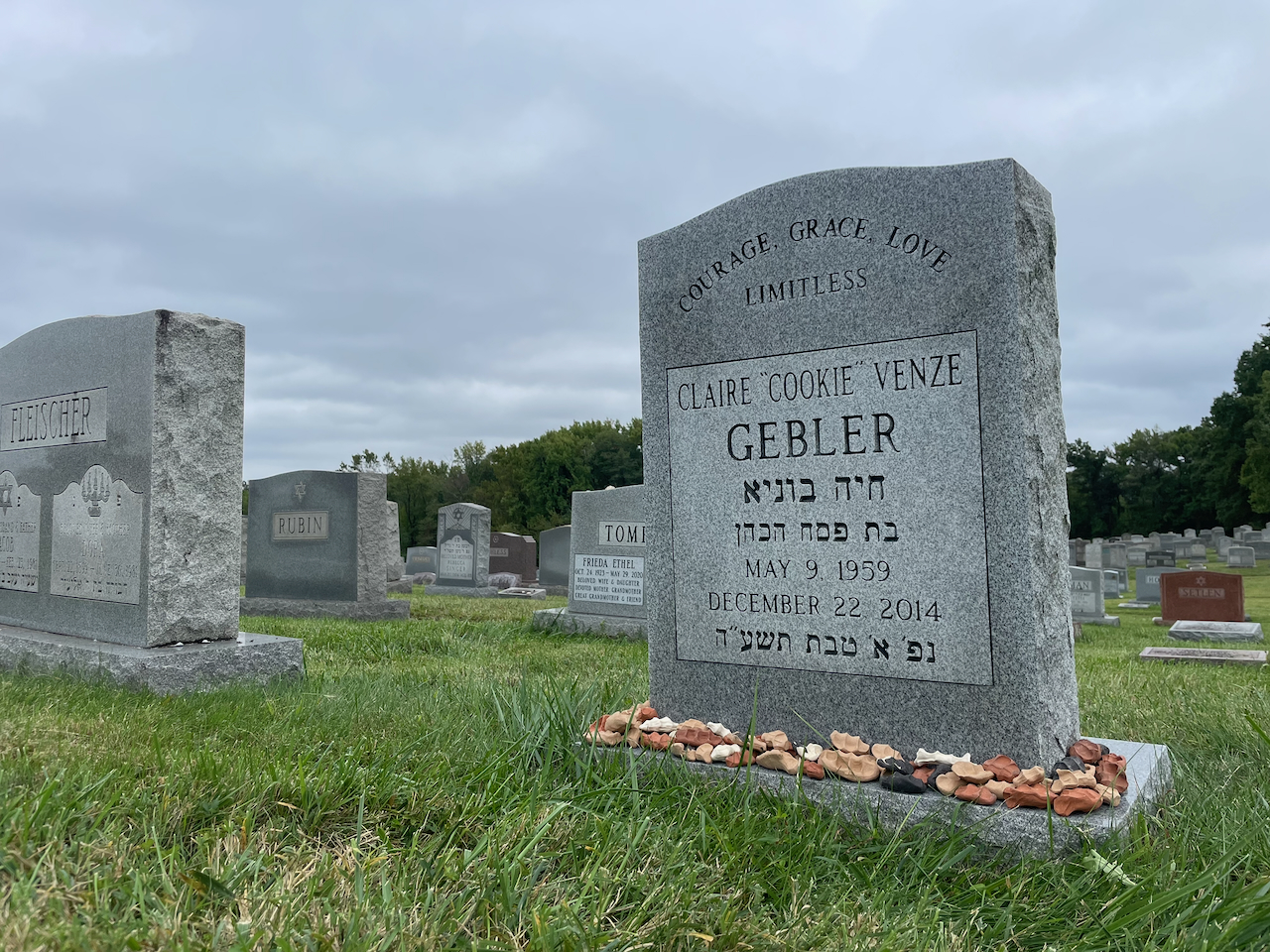
In honor and memory of Claire Venze Gebler z”l
My mother died on Rosh Chodesh Tevet: the darkest day of the year, the new moon barely a sliver in the sky on the longest winter night, ushering in the month of anger.
Anger is not an emotion I resonate with, and it also isn't something that reminds me of my mama. My mama, she was the light. But I started to notice the anger that arose in me in the weeks and months following her death, connected to loss, and all the ripples of loss in my life precipitated by her death.
Everything felt like it was crashing in slow motion. From the outside I was functioning, I was processing, I was “grieving and healing,” hosting grief groups for others whose parents had died. I felt like I had to hold it all together, but all I wanted was to move slow. To find stillness. To listen to what my anger was trying to tell me.
I turned to my art practice. Before my mama died I was working mostly with watercolors and gunpowder. But after she died, I needed something less ephemeral and more tactile, more physical, something I could touch and feel, something that required using my body. I turned to fabric and clay. Using my hands, I spread clay slip onto fabric, letting it be raw and messy. And one day, one of those days that I couldn't really think, I just started squeezing clay.
I would pick up a handful of clay, squeeze it and release it. Pick up another, squeeze and release. Again and again until my body, my hands, ached, until there were hundreds of clay squeezes filling up my studio floor.
The pile sat in my studio. Several days passed. A friend came by and noticed the pile and asked me about it. I shrugged, I didn't really have words to describe what they were, but my friend was intrigued by their form and said they would fire them in the kiln for me.
I was surprised to see the white clay was now a silvery grey after the firing. It reminded me of stones. When my mama’s yahrzeit rolled around that year, I carried these stones with me to her gravesite and placed them on her headstone. To carry the weight of my grief in stones.

It’s now my tradition to carry these stones — grief stones — with me whenever I visit my mother, my grandparents and my other ancestors buried near her at the cemetery. I carry grief stones in my pocket, in my bag, in my car, all the time now.
What I didn't expect was the way grief stones grew into a communal prayer and ritual, one that spans across the country and across the world. The grief stones were like magnets in my studio, anytime someone came for a studio visit, their hands would find the basket of grief stones sorting through until finding one that perfectly fit their hand, surprised that even though it was my handprint, the stone fit so well in their hand.
We live in a grief avoidant — and touch avoidant — culture; grief stones allow people to physicalize the grief we all carry, a reminder that they are not alone.
I started bringing grief stones as ritual objects to collective mourning spaces like on Tisha b’Av and Yom Hashoah (Holocaust Memorial Day), inviting community into an active meditation to create the stones and then inviting them to take one home with them, not the one they made but one made by someone else. I’ve shared them in prayer spaces on Yom Kippur before Viddui, for people to have as a ritual object to hold during selichot prayers, a simple tool to connect our body to our words through the gesture of squeezing someone's hand, through squeezing clay an element to ground us in times we need help. Each time I make grief stones in community, we add to the collective pile of grief but we also create a chain of support — everyone holding hands with each other.

What my grief has taught me and continues to reveal to me is that words often fall short but finding a way back to my body opens space to heal. Grief stones are a way to instantly reconnect my body to earth, my presence to aliveness. Even if you don’t have the practice of going to a gravesite, griefstones are a way to support someone in their grief, saying:
I see you.
I’m here for you.
Hold my hand.
We are not meant to grieve alone.
Get guidance for a Grief Stone ritual of your own in our guide, The Sacred Practice of Grief, written with Meirav Ong, Morell Mordel, and Shomer Collective.
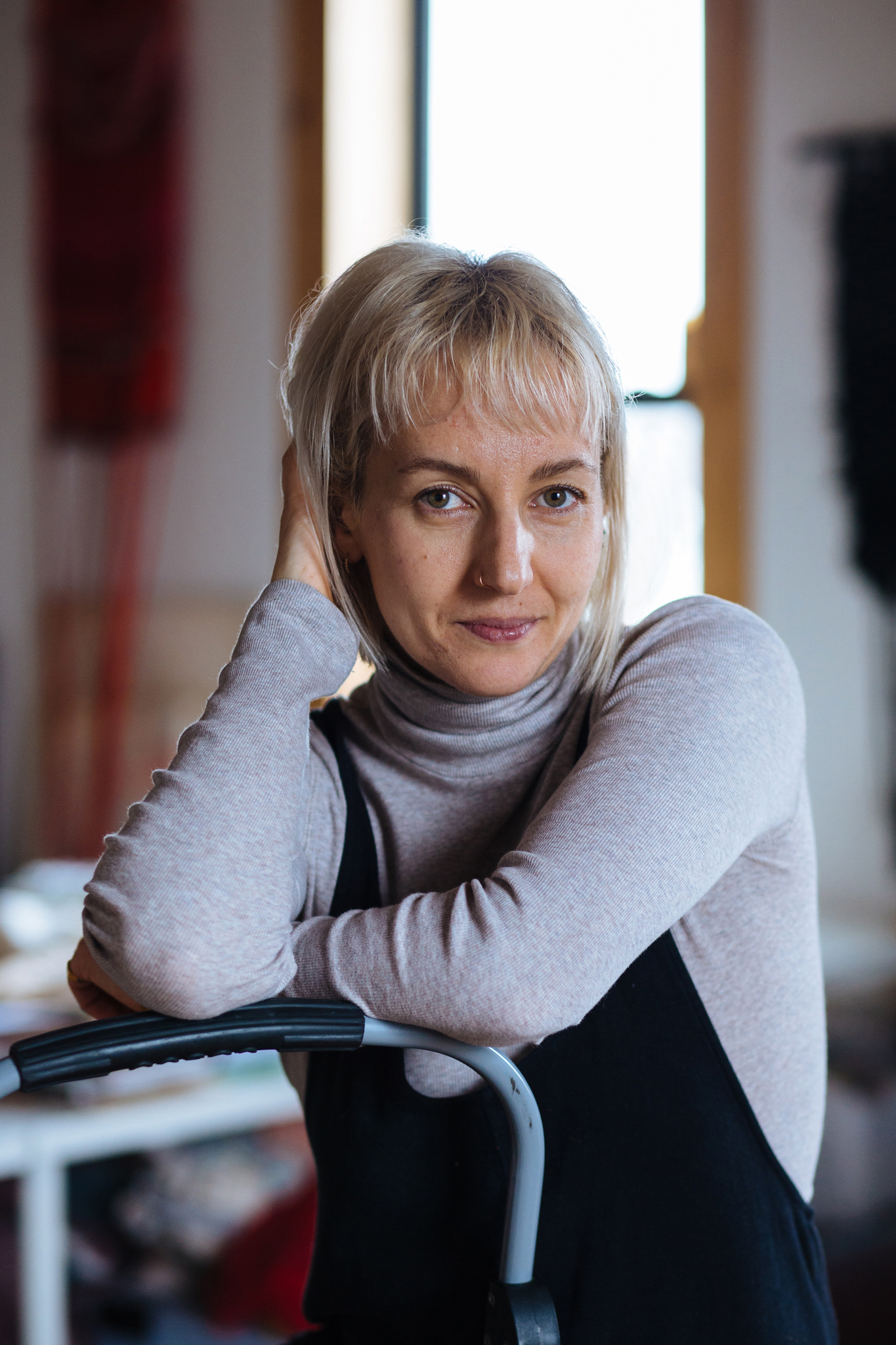
Meirav Ong (she/they) is an Ashkenazi-American transdisciplinary artist whose work with textiles, clay, sound, performance, and social practice explores grief, intimacy, and embodied prayer. Rooted in ancestral heritage and somatic processes, her work engages with inherited materials (physical and spiritual) and embodied gestures, centering caretaking, domestic labor, and the transformative power of shared ritual. Learn more at meiravong.com or on Instagram: @meiravi.